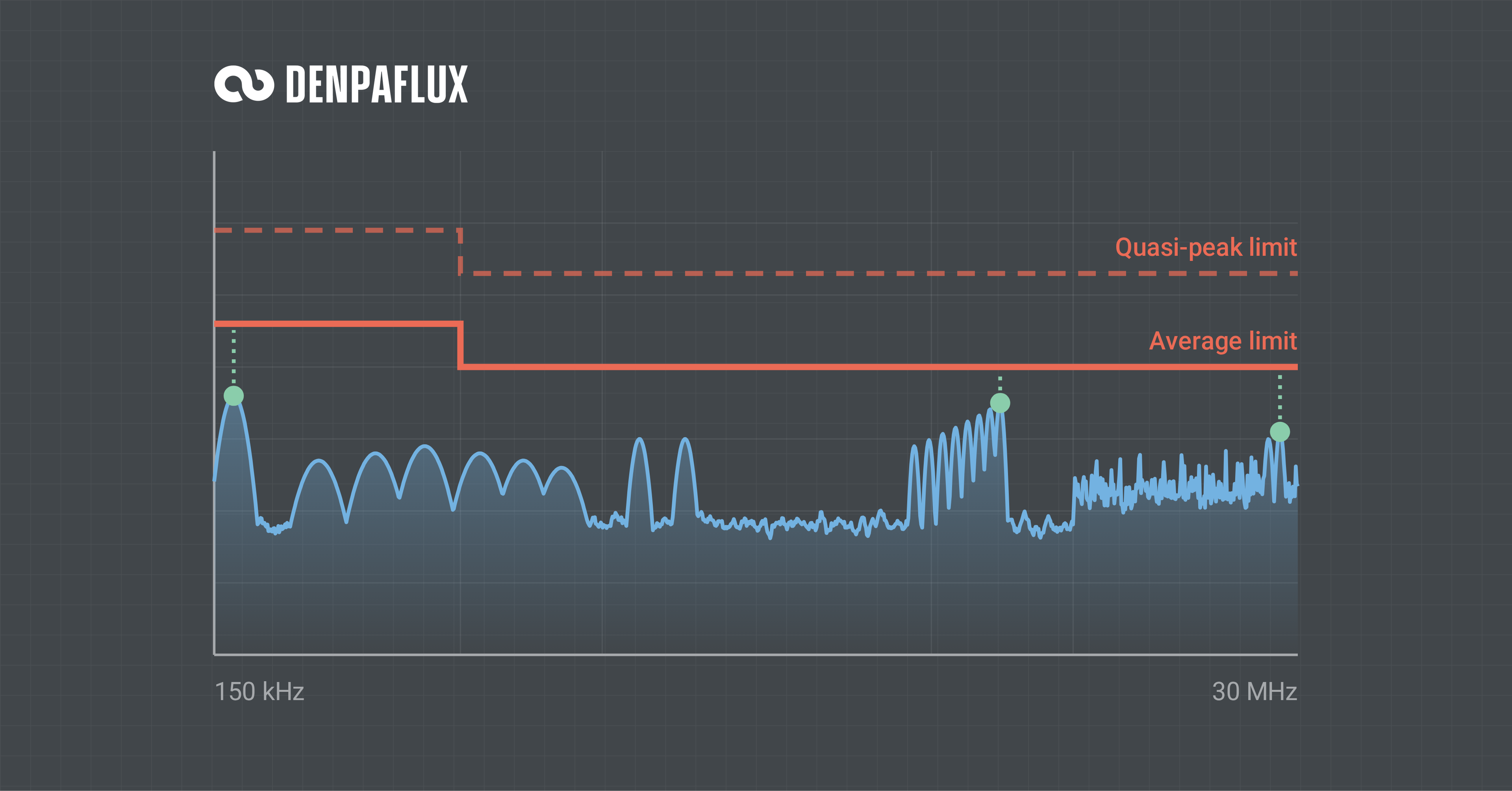
Electronic products, and the environments they operate in, are evolving quickly. Electromagnetic compatibility (EMC) processes often haven't kept up. In many organizations, compliance is still treated as something to confirm near the end of development, after critical design decisions have already been made.
That can leave teams with fewer options just when the cost of change is highest. The question is no longer whether EMC testing matters, but whether waiting until the end is still a viable strategy. Moving EMC upstream can help companies reduce uncertainty, avoid unnecessary rework and approach formal testing with greater confidence.
Why EMC testing can't wait until the end
Electromagnetic compatibility (EMC) is the ability of an electronic product to operate reliably in its electromagnetic environment without causing unacceptable interference to other devices and without being unduly affected by electromagnetic disturbances itself. EMC has two core engineering dimensions, controlling emissions and ensuring immunity, within a defined compliance framework.
- Emissions
- Do conducted or radiated emissions produced by the product disturb other devices?
- Immunity
- Can the product operate reliably when exposed to electromagnetic disturbances in its environment?
- Compliance
- Does the product meet the requirements applicable to its product category and target market?
For manufacturers, EMC is both an engineering requirement and, in many markets, a condition of regulatory compliance and market access. Beyond applicable regulations and standards, electronic products and components may also need to meet additional EMC specifications established by industry groups, original equipment manufacturers (OEMs) or individual customers.
Traditionally, EMC has often been treated as a late-stage validation step: design the product, build the prototype, then test to see whether it passes. If it doesn't, troubleshoot, redesign and test again.
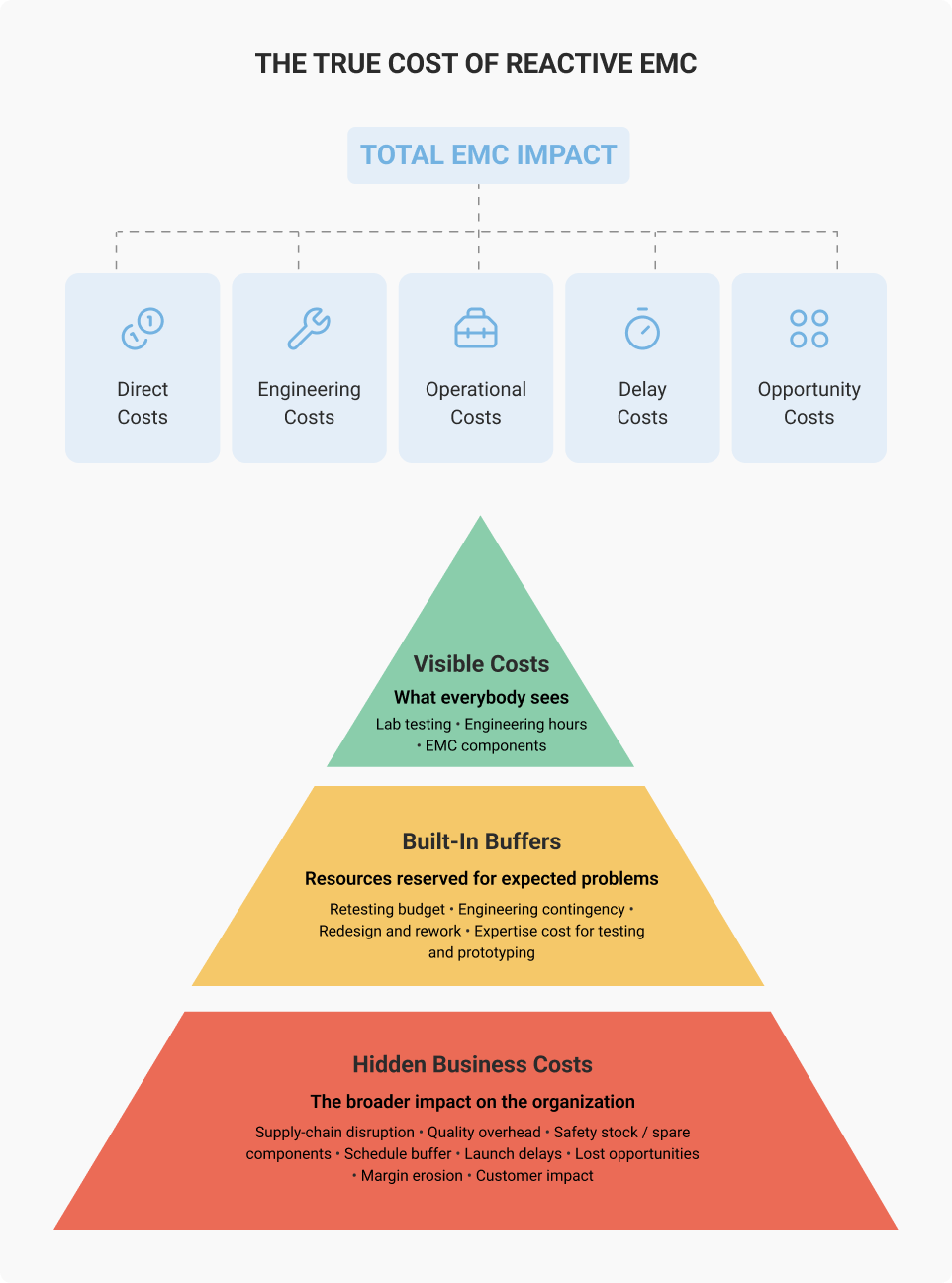
That model is becoming less sustainable as electronic products grow more complex and development cycles accelerate. A PCB routing or grounding issue that creates excessive emissions may be relatively easy to correct during design. Discover the same problem after boards have been fabricated and formal testing is underway, and the fix could require a board redesign, new prototypes, added filtering or shielding and another round of testing.
By the time a problem appears in formal EMC testing, many of the decisions that created it may already be locked in. The later the discovery, the fewer good options remain and the more expensive those options become.
What's changed for EMC?
The basic principles of EMC haven't changed, but the environment in which manufacturers have to manage it has. Electronic products are being developed faster, integrating more functionality and operating within an increasingly complex web of technical and regulatory requirements. At the same time, the specialized expertise needed to anticipate EMC problems is not always available where and when it is needed.
Four shifts are raising the stakes:
- Faster development timelines
- Manufacturers are under constant pressure to shorten innovation cycles and get new electronic products to market faster. There is less time, and less schedule flexibility, for an unexpected redesign near the end.
- Greater product and environmental complexity
- More connectivity, high-speed processing, sensors, power electronics and dense circuitry create more potential electromagnetic interactions within the product and with the surrounding environment.
- Constrained specialist expertise
- EMC is a specialized discipline, and experienced engineering resources are limited. Using that expertise for late-stage troubleshooting can pull scarce capacity away from new product development.
- A more intertwined regulatory environment
- EMC increasingly sits alongside requirements for radio performance, electrical safety, cybersecurity and other areas. These obligations can overlap within the same product and evolve as technologies, markets and standards change.
None of these pressures exists in isolation. More complex products are being developed on tighter schedules, often with limited specialist resources, while the requirements surrounding them continue to evolve. That combination makes late-stage discovery far more disruptive than it once was.
The traditional "build it, test it, fix it" model leaves too much uncertainty at the point where manufacturers have the least room to absorb it.
The case for moving EMC upstream
Moving EMC upstream doesn't mean adding more testing. It means making EMC part of product development before the most consequential decisions are locked in.
That starts with understanding applicable requirements early, identifying likely EMC risks during architecture and design, reviewing critical decisions while there is still room to change them and using simulation, bench measurements or pre-compliance testing to check performance as the design matures. Formal EMC testing remains essential, but its role changes: ideally, it confirms that the product is ready rather than revealing a major problem for the first time.
This earlier involvement gives teams more control. Potential problems can be addressed with a wider range of design options, engineering resources can be used more deliberately, and fewer costs are left to accumulate around late redesign, retesting or schedule disruption.
Just as importantly, EMC becomes less dependent on last-minute troubleshooting. Requirements, review points and verification can become part of a repeatable development process rather than something the team confronts anew at the end of every project.
DENPAFLUX helps manufacturers move EMC upstream by combining specialized expertise, structured processes and intelligent digital tools across the product lifecycle.
The goal is to prevent EMC problems from becoming late-stage failures by identifying and addressing them early, when teams still have the most options. When EMC is treated proactively, companies stay in control of timelines and budgets, and compliance becomes more predictable.

Free whitepaper
From EMC Compliance to Market Advantage
Take a deeper look at how proactive EMC can reduce development risk, control costs and improve market readiness, with a practical framework for moving EMC upstream.
Download the whitepaperFrequently asked questions
What does moving EMC upstream mean?
It means building EMC into product development from the start instead of checking it only at the end. Teams define applicable requirements early, review EMC risks during architecture and design, and use simulation, bench measurements or pre-compliance testing as the design matures.
Does a proactive approach replace formal EMC testing?
No. Formal EMC testing remains essential. In a proactive approach, it confirms that the product is ready rather than being the first place a major problem comes to light.
Why are late EMC failures so expensive?
By the time formal testing starts, boards may already be fabricated, components sourced and launch plans underway. A fix that would have been simple during design can then require a board redesign, new prototypes, added filtering or shielding and another round of testing.
What is the difference between EMC emissions and immunity?
Emissions are the conducted or radiated disturbances a product produces that could interfere with other devices. Immunity is the product's ability to keep operating reliably when it is exposed to electromagnetic disturbances in its environment.